 Federico
 Map
Entities, accounts, balances, intercompany flows and the real cost of each movement. Most groups have never seen this on one page.
Latin American tax regimes reward companies that understand them and punish companies that assume they work like anywhere else. The same is true of moving cash across the region.
This is not tax advisory in the sense of an opinion letter. It is the operating side: where the cash actually sits, what it costs to move, which structure the business can defend in an audit, and what an incentive regime demands in return for what it gives.
I have built inside one of those regimes — the Manaus Free Trade Zone — and managed treasury across Brazil, Colombia, Ecuador, Peru, Venezuela and Europe. I work with your tax advisers rather than replacing them; what I add is the executive who has to live with the structure after they have signed off on it.
Entities, accounts, balances, intercompany flows and the real cost of each movement. Most groups have never seen this on one page.
The banking and treasury design, the intercompany policy, and the tax positions worth defending — with the advisers in the room.
A cash discipline the finance team runs monthly, and the documentation an auditor will ask for before anyone remembers why.
At Ardagh Group I built the Manaus can-ends plant inside the Manaus Free Trade Zone while running the existing plants in Jacareí and Alagoinhas — which is the clearest lesson I have in what an incentive regime gives and what it demands back. Across Colgate-Palmolive, Whirlpool, Ingersoll Rand and Pierre-Fabre I carried the treasury position in Brazil, the Andean region and Europe, including a period when moving cash out of Venezuela was its own discipline.
No. They give the technical opinion and the local filings; I decide, with you, which structure the business can actually operate and defend. The failure I see most often is a technically correct structure that nobody in the company can run, which falls apart at the first audit or the first change of controller.
Sometimes, and the answer depends on obligations the brochure does not emphasise: local content, production-process rules, investment commitments and the reporting that proves them. I have operated inside one, so the question I start with is what the regime demands every year, not what it saves on day one.
For a mid-sized group, two to three weeks to map entities, accounts, balances and intercompany flows onto one page. That map is usually the first time anyone has seen the whole position, and it tends to pay for the engagement on its own.
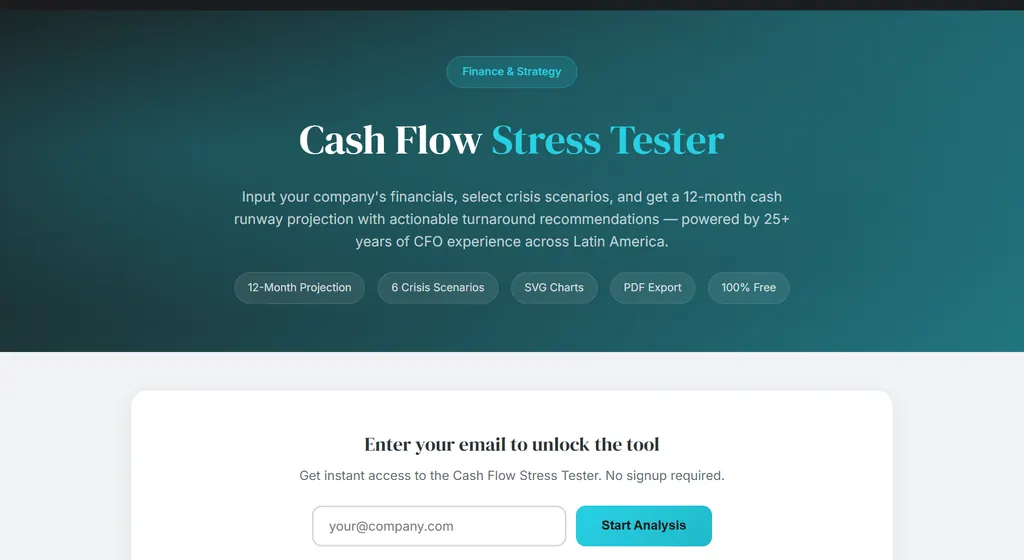
Enter your financials, pick the crisis (revenue decline, FX shock, cost spike) and get a twelve-month runway projection with turnaround recommendations and a PDF report.
Try it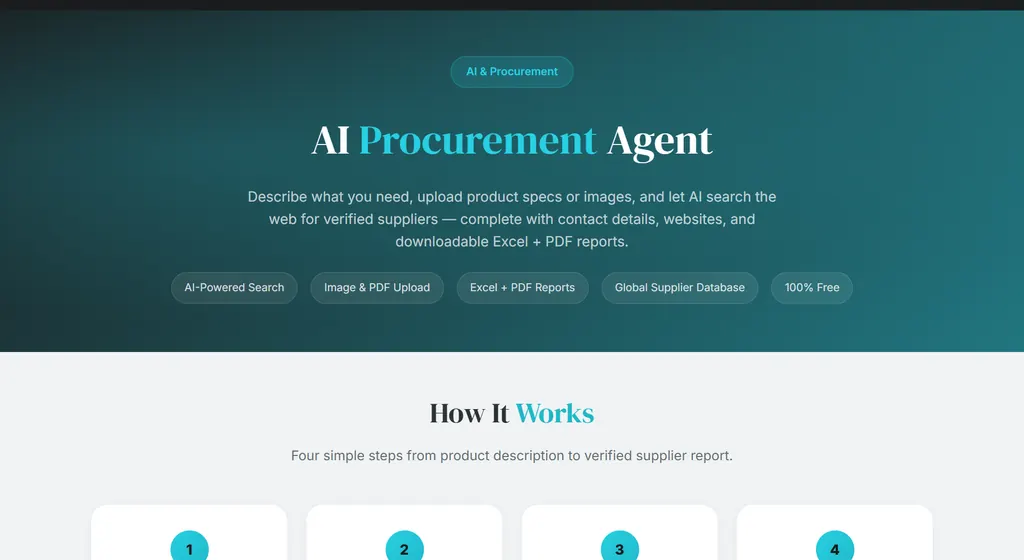
Describe what you need, upload specs or images, and get verified suppliers with contacts, websites and downloadable Excel and PDF reports — free.
Try itMost mid-market companies reach a point where the accountant is no longer enough and a full-time Chief Financial Officer (CFO) is not yet affordable. That gap is where I work — a few days a month, or full weeks during an event, with the same accountability as a permanent hire.
Deals are won or lost after signing. I work on the side that has to live with the result: the diligence that asks the operating questions, and the integration or the exit that follows.
A 30-minute call, in English, Spanish, Portuguese or Italian. No deck, no pitch — you describe the situation and I tell you whether I am the right person for it.