 Federico
 Design
The chart of accounts, the cost structure and the reporting model, decided by finance rather than inherited from a template.
An Enterprise Resource Planning (ERP) project fails in finance more often than in technology. I lead the finance workstream: the chart of accounts, the controls, the reporting, the migration, and the day-one numbers that have to be right.
I am not the systems integrator and I do not compete with one. I am the person on the client side whose numbers have to be right on go-live day, and who therefore asks the questions the integrator would rather defer: what the chart of accounts has to support three years out, which reports actually get used, what reconciles to what, and who signs off the migrated balances.
I led the finance workstream in five SAP implementations across Brazil, Colombia, Ecuador, Peru and Venezuela, and later stabilised a JD Edwards (JDE) system that had gone live badly at Pierre-Fabre Brazil. The second kind of work — rescuing a bad go-live — is more common than anyone admits.
The chart of accounts, the cost structure and the reporting model, decided by finance rather than inherited from a template.
Controls, interfaces and the data migration, with reconciliations at every step and a named owner for the opening balances.
The first close on the new system is the real test. I stay through it, because that is when the gaps appear.
Across eleven years at Colgate-Palmolive I led the finance workstream in five SAP implementations, in Brazil, Colombia, Ecuador, Peru and Venezuela. Chart of accounts, controls, reporting, go-live readiness. I was not the systems integrator; I was the person whose numbers had to be right on day one. Later, at Pierre-Fabre Brazil, the work was the other half of the same problem: stabilising a JD Edwards (JDE) system the finance team could not close on.
No. The integrator configures the system; I represent finance to them. Those are different jobs and the project needs both. What I do replace is the situation where the integrator is effectively deciding the chart of accounts because nobody senior in finance has the time to.
Yes, and that is a common engagement. The first step is to find out whether the problem is configuration, data migrated badly, process, or people never trained — because the fix for each is different and companies routinely spend money on the wrong one.
No. Five of my implementations were SAP and one of my rescues was JD Edwards, but the finance workstream is the same discipline on any system: what the accounts have to support, what reconciles to what, what the controls are, and who signs the opening balances.
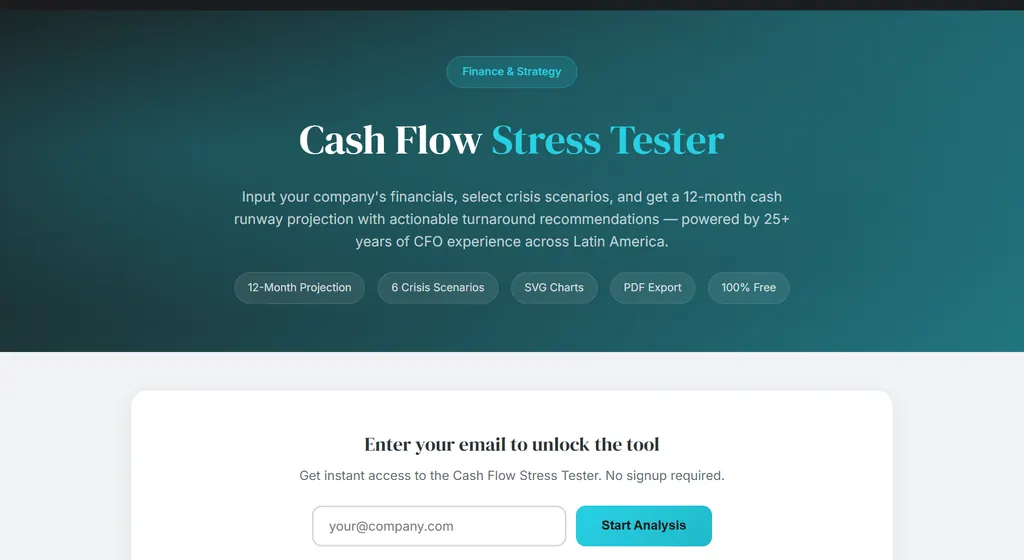
Enter your financials, pick the crisis (revenue decline, FX shock, cost spike) and get a twelve-month runway projection with turnaround recommendations and a PDF report.
Try it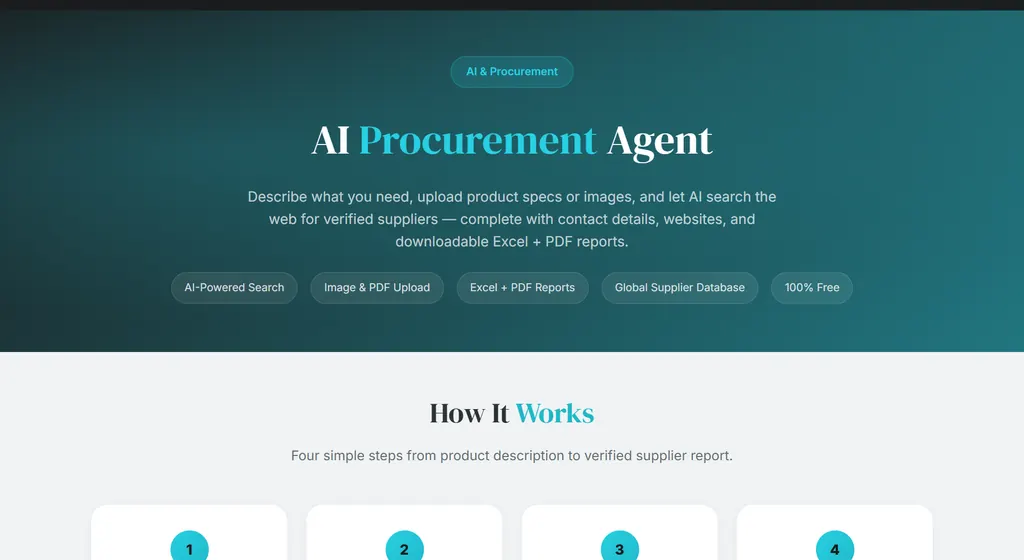
Describe what you need, upload specs or images, and get verified suppliers with contacts, websites and downloadable Excel and PDF reports — free.
Try itMost mid-market companies reach a point where the accountant is no longer enough and a full-time Chief Financial Officer (CFO) is not yet affordable. That gap is where I work — a few days a month, or full weeks during an event, with the same accountability as a permanent hire.
Most Artificial Intelligence (AI) projects in mid-market companies die as pilots because nobody named the decision they were meant to improve, or the person who owns it. I start from the decision and work backwards.
A 30-minute call, in English, Spanish, Portuguese or Italian. No deck, no pitch — you describe the situation and I tell you whether I am the right person for it.