 Federico
 Find the decision
Not the technology. Which recurring decision is slow, expensive or inconsistent, who owns it, and what it costs to get wrong.
Most Artificial Intelligence (AI) projects in mid-market companies die as pilots because nobody named the decision they were meant to improve, or the person who owns it. I start from the decision and work backwards.
I am not a vendor and I do not sell licences. I am an operator who builds: an AI-aided investment platform with per-account broker gateways and a committee that reviews every opportunity before it becomes an order; a trilingual learning platform with narrated courses; and the automation behind the workflow tools published on this site.
That matters because the hard part of an AI project is never the model. It is the process around it — who decides, on what data, with what control when it is wrong. I have had to live with those answers in my own systems, which is a different standard from recommending them.
Not the technology. Which recurring decision is slow, expensive or inconsistent, who owns it, and what it costs to get wrong.
One process, end to end, in production, with the controls around it. Weeks, not a transformation programme.
Documentation, training and the next two candidates in the queue, so the second one does not need me.
At Woden Group Peru I led the Artificial Intelligence, digital transformation and automation programme inside a 250-person operation that was also being turned around, which is the realistic setting for most of these projects rather than a greenfield innovation lab. Outside that, I build and run my own systems: FMC Investments, an AI-aided investment platform where no opportunity becomes an order without passing an automated committee and position-level guardrails; FMC Learning, a trilingual course platform; and the automation behind the tools on this site.
Both happen, and I am explicit about which. For a first implementation I usually build it, because the fastest way to kill a transformation programme is a six-month vendor selection. Once one process is in production and the team has seen how it works, they can carry the next ones with me reviewing.
Usually not, and the belief that it is costs companies years. Most useful applications need one clean process and one reliable table, not a data lake. If the data genuinely is not there, that is the first deliverable, and it is worth knowing in weeks rather than after a platform purchase.
By designing the control before the capability. In my own investment platform no opportunity becomes an order without passing an automated committee and position-level guardrails, and every decision is logged and reviewable. The same principle applies in a company: name what the system may decide alone, what needs a human, and what must never be automated.
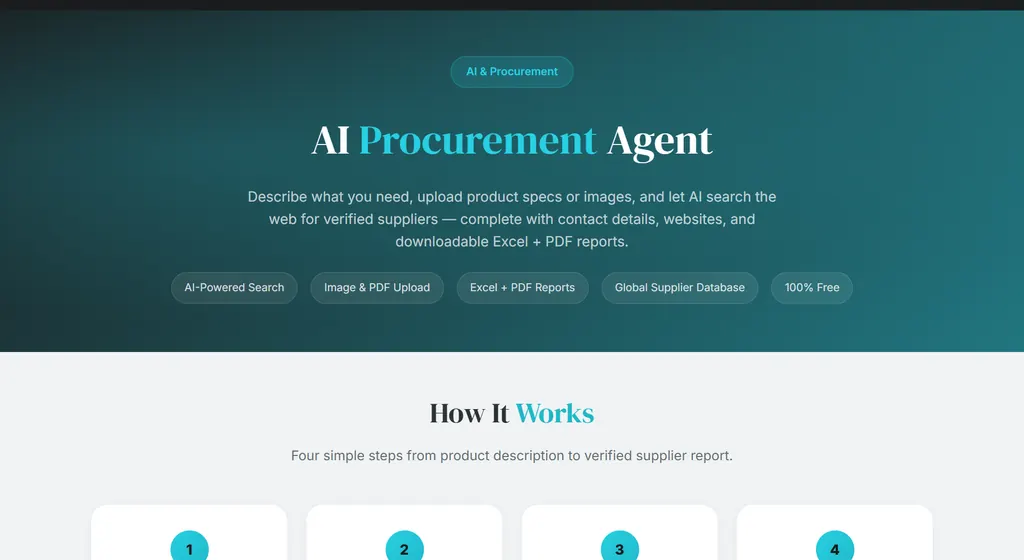
Describe what you need, upload specs or images, and get verified suppliers with contacts, websites and downloadable Excel and PDF reports — free.
Try it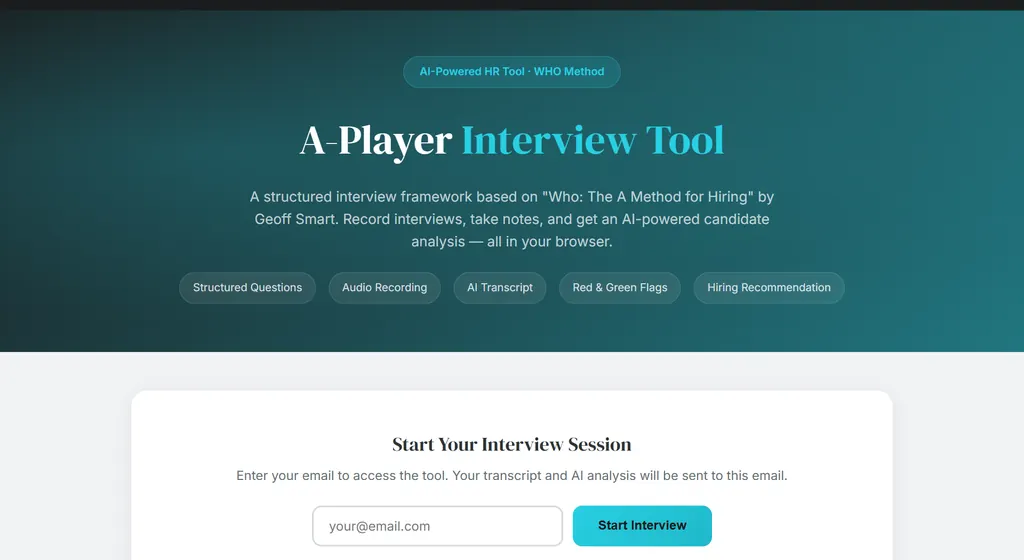
Structured interviewing on Geoff Smart's WHO Method: record, take notes across seven sections, and get an AI candidate analysis with strengths, red flags and a hire / no-hire recommendation.
Try itMost mid-market companies reach a point where the accountant is no longer enough and a full-time Chief Financial Officer (CFO) is not yet affordable. That gap is where I work — a few days a month, or full weeks during an event, with the same accountability as a permanent hire.
An Enterprise Resource Planning (ERP) project fails in finance more often than in technology. I lead the finance workstream: the chart of accounts, the controls, the reporting, the migration, and the day-one numbers that have to be right.
A 30-minute call, in English, Spanish, Portuguese or Italian. No deck, no pitch — you describe the situation and I tell you whether I am the right person for it.